
Curious about where your first Dubai investment?
Go through some frequently asked questions.
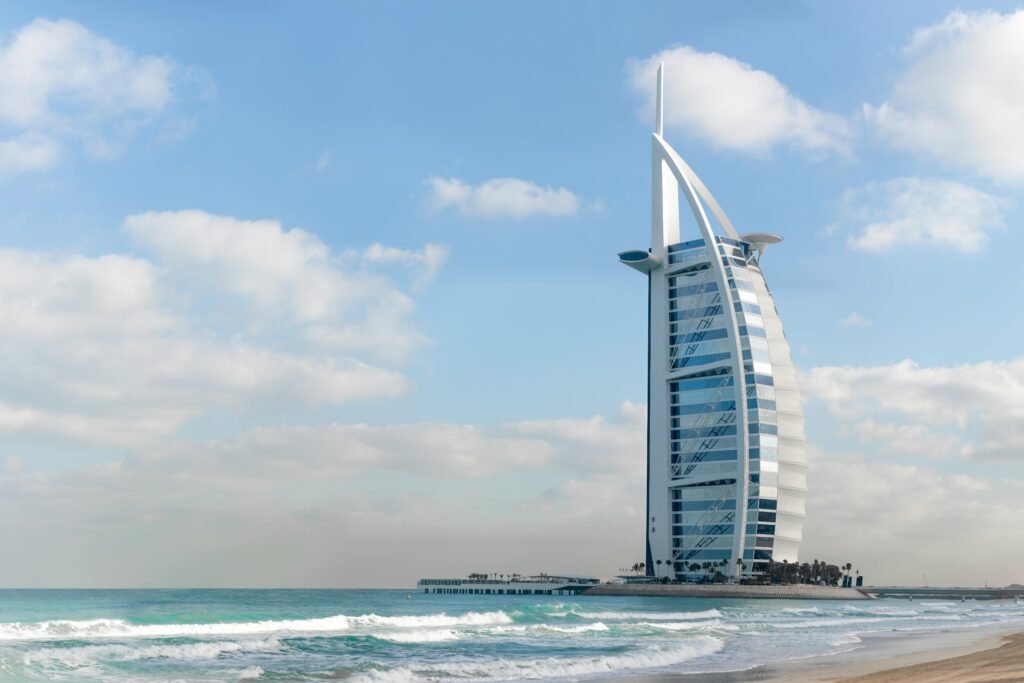
Dubai offers a compelling combination of a world-class lifestyle, strong financial returns, and an investor-friendly environment.
Global Hub & Lifestyle:
• Safety and Stability: Benefit from a highly safe city and politically stable environment.
• Luxury Living: Enjoy a high-quality, cosmopolitan lifestyle.
• Connectivity: Access to a global transport and business network.Strong Financial Returns:
• Capital Appreciation: Potential for significant capital growth, historically up to 10% on residential properties.
• High Rental Yields: Generate excellent annual income with typical yields ranging from 6% to 9%.Zero Local Taxes:
• 0% Taxes: No Income Tax, Capital Gains Tax, or Withholding Tax.
• Repatriation: No limits on the repatriation of funds.Investor-Friendly Legal Framework:
• Freehold Ownership: Robust laws for property ownership, especially in designated freehold areas where 100% foreign ownership is permitted.Exchange Rate Protection: The UAE Dirham (AED) is pegged to the US Dollar (USD), offering stability and protection from fluctuations in your home currency.
Visa Eligibility: An investment of AED 2 million in property can qualify you for a 10-year Golden Visa.
Yes. Foreign nationals, including both expatriate residents and non-resident investors, are legally permitted to purchase property in designated freehold areas. They have full ownership rights to buy, sell, or lease their property.
A freehold area is a specific zone approved by the government where foreign nationals can obtain full, permanent ownership of both the property structure and the land it occupies.
Permanent Ownership: Freehold provides indefinite ownership rights.
Complete Control: You have the right to sell, rent, modify, or pass on the property to your heirs.
Official Recognition: Ownership is officially registered with the Dubai Land Department (DLD).
Foreign buyers only need a valid passport. A UAE resident visa is not a prerequisite for purchasing property in a freehold area.
Yes, you can. Non-resident buyers are eligible for mortgages from UAE banks, though they typically require a higher down payment and extensive proof of income compared to residents.
No. Dubai does not impose annual property tax or capital gains tax.
Yes. A minimum investment of AED 2 million in property can qualify you (and your dependents) for a renewable 10-year Golden Visa.
When considering a property purchase in Dubai, it's essential to know the various costs that may arise beyond the purchase price. Apart from the purchase price of the property, there are associated transaction costs, registration fees, VAT etc. Additonally, if mortgage is availed, costs pertaining to sourcing the mortgage, valuation fees, insurance etc will also apply apart from the mortgage itself. Opportune can help you understand these details and set you up so that there are no surprises
Key estimated costs to consider:
1. Dubai Land Department (DLD) fees: All properties transacted in Dubai must be registered with the DLD. This is important from the aspect of enforcing rights guaranteed under local laws. To register your property and validate the transaction, you must comply with to DLD regulations within 60 days. The following DLD Fees are to be paid:
• Dubai Land Department Fee 4% of the purchase price + AED 580 admin fee for the title deed.
• Property Registration Fee:
i. for properties < AED 500,000 : AED 2,000 plus 5% VAT
ii. for properties > AED 500,000AED : 4,000 plus 5% VAT
In case a mortgage is availed, additional fees to register the mortgage apply @0.25% of the mortgage amount + AED 290
2. Down payment is normally 24% of the property value. For the majority of the off plan projects down payment is usually 20% of the purchase price and an additional 4% for DLD registration. The rest of the payment will mostly be staggered monthly or quarterly payments. Generally all transactions will be initiated with a token amount which is sufficient to hold the property for a timeframe, within which, down payment for the property must be made.
3. Real Estate Agency Fee: There will be a real estate agent commission to cover the expertise and time spent by your agent, as well as a conveyancing fee. Your real estate agent and conveyancer are responsible for ensuring that all legal requirements are met according to UAE Law. These fees may include a wide range of costs, such as administrative, legal, and other expenses necessary to ensure the entire process is carried out smoothly and efficiently.
• Agency fee – 5% of property value. In case the property is bought from a developer, this cost is covered by the developer.
• Conveyancing fee – AED 6,000 to AED 10,000
4. Mortgage arrangement fee – If you choose to avail of a mortgage, it's one must keep in mind that there are additional fees that you may encounter.
• The Bank Mortgage Arrangement Fee usually amounts to 1% of the loan value plus an additional 5% VAT.
• The fee for property valuation varies and is typically between AED 2,500 to AED 3,500, plus an additional 5% VAT.
5. Home insurance - Although home insurance is not mandatory, it is highly recommended to avoid large unexpected costs in the event of an emergency. Depending on the property it will be approximately 1000 AED.
6. Life Insurance - When purchasing a property with a mortgage, you will usually be required to take out a life insurance policy. Typically charged at 0.4-0.8% per annum on the decreasing loan balance.
Dubai offers a wide selection, including apartments, villas and townhouses, all available in freehold communities.
Apartments: Often found along major routes or coastal areas (e.g., Dubai Marina, JBR).
Villas/Townhouses: Generally located in master-planned, inland communities (e.g., Arabian Ranches, JVC).
Both are viable options, depending on your goal.
Ready-to-Move-In properties allow for immediate income generation but require a higher upfront cost.
Off-Plan (Under Construction) properties often come at attractive rates with potential for higher capital gains, though they carry a risk of delays or, rarely, project cancellation.
You have several flexible options:
Rent: Lease it out long-term for a stable rental yield.
Sell: Realize capital appreciation by selling the property.
Short-Term Leasing (AirBnB): Lease it out for short stays, often generating higher returns (subject to regulations).
Very important. You should research the developer's reputation, track record (minimal historical delays), and the quality of the community, as this affects project stability and future value.